You can't solve egress.
But you can stop ignoring it.
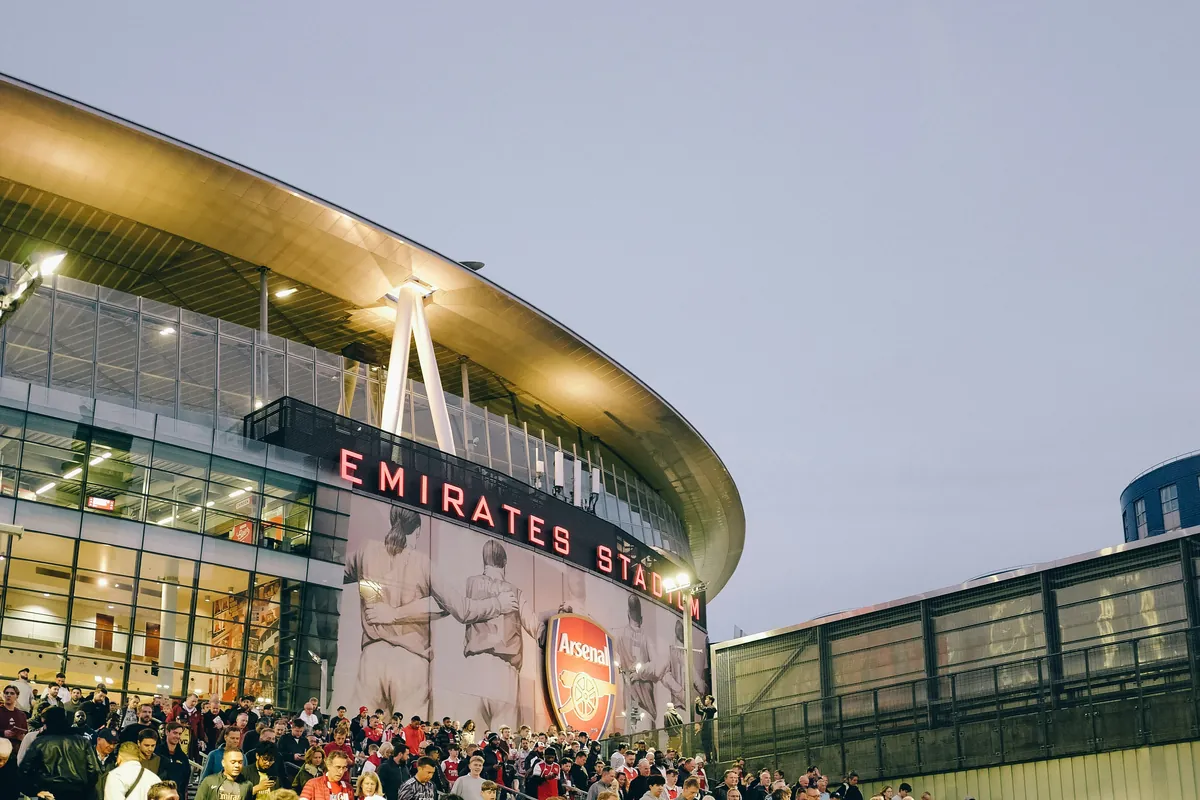
The final whistle blows. Seventy thousand people stand up at the same time. Every one of them is heading to the same exits, the same walkways, the same parking lots, in the same 30-minute window. This is egress — and it's the single worst-designed moment in the entire fan experience at virtually every major venue in the country.
The concourses flood. The gates bottleneck. The pedestrian paths that absorbed a gradual, two-hour ingress are now carrying the same volume in one-sixth the time.
The walk to the car — a manageable 10 minutes on the way in — is now 20 minutes through a dark, chaotic parking lot filled with pedestrians, vehicles trying to exit, headlights, brake lights, and thousands of people who are tired, overstimulated, and in many cases, impaired.
Not because venue operators are careless. But because egress is, by its nature, the hardest crowd management problem in live events — and the honest truth is that no amount of infrastructure can make 70,000 people leaving at once feel orderly. The physics don't allow it.
So most venues do the only thing that feels available: they ignore it. They design the ingress. They plan the parking. They staff the gates. They optimize the concessions. And then the event ends, and the plan ends with it.
That's the gap. Not that egress is unsolvable — it's that the solvable parts are being ignored because the unsolvable parts feel overwhelming.
Why egress is structurally harder than ingress
The reason egress can't be "fixed" the way ingress can is a matter of physics and human behavior.
Ingress is distributed. Fans arrive over a 2–3 hour window. Some show up at gates open. Some arrive at kickoff. Some trickle in during the first quarter. The parking lots fill gradually. The walkways absorb the flow because it's spread across time. A transit system during ingress is an enhancement — it makes a manageable situation better.
Egress is compressed. The event ends and 70,000 people attempt to leave simultaneously. There is no natural distribution. There is no staggering. The demand spike is instant and total. The walkways that handled 35,000 people per hour during ingress (spread over two hours) now need to handle 70,000 in 30 minutes. The parking lots that filled over 120 minutes now empty — or try to — in a fraction of that time.
No transit system can move 70,000 people in 20 minutes. No walkway can absorb that volume without congestion. No parking lot can empty that many cars without gridlock. Anyone who claims otherwise is selling something.
But here's what most venues miss: the fact that you can't solve all of egress doesn't mean you can't solve parts of it. And the parts you can solve are the parts that matter most — for safety, for revenue, for fan retention, and for the populations that need the most help.
What happens after dark
Here's the dimension of egress that should concern every venue operator, every risk manager, and every insurance underwriter: the vast majority of post-event egress happens in the dark.
NFL games end between 4:00 and 11:30 PM depending on kickoff time. Concert events regularly end at 11 PM or later. College football night games end at 10 or 11 PM — emptying a crowd the size of a mid-sized city into the dark all at once. Even afternoon events in the fall — 1:00 PM kickoffs — end as daylight fades.
The national data on nighttime pedestrian safety is alarming:
In 2024, 7,080 pedestrians were killed in the United States — an average of 19 per day. More than three-quarters of those fatalities occurred after dark. Fatal pedestrian crashes at night rose 84% between 2010 and 2023 — compared to a 28% increase in daytime fatalities. Pedestrian deaths have increased 80% since 2009, while all other traffic fatalities increased only 13%. (NHTSA / Governors Highway Safety Association)
These are public roadway statistics, not venue-specific numbers. But the conditions that drive nighttime pedestrian fatalities — darkness, reduced visibility, pedestrian-vehicle conflict zones, impaired pedestrians, large vehicles moving through crowds — are all present in a stadium parking lot at 10:45 PM on a Sunday night.
A venue parking lot during post-event egress is a concentrated version of the most dangerous pedestrian environment in America: thousands of people walking through an active vehicle zone, in the dark, many of them fatigued or impaired, with limited lighting, no sidewalks, no crosswalks, and no separation between foot traffic and vehicle traffic.
This is the environment that most venues have decided to leave unmanaged — because the event is over, the staff is demobilizing, and the assumption is that getting people out is the fans' problem.
The last impression is the lasting impression
The fan experience industry has spent a decade optimizing every moment of the event — from the ticket purchase to the gate entry to the seat to the concessions to the in-game entertainment. Billions of dollars have been invested in making the experience inside the venue world-class.
And then the event ends, and the fan walks into a dark parking lot with no system, no signage, no transit, and no evidence that anyone planned this part.
As one event planning analysis noted: "The final impression of an event often hinges on the departure experience. Even if attendees loved the performances, hours spent stuck in a parking lot or in a slow-moving crowd can sour their overall memory." (Ticket Fairy / Post-Event Egress Planning)
The fan experience research is consistent: first impressions drive trial. Last impressions drive repeat attendance. A fan who had a great time at the game but spent 45 minutes in a dark, chaotic parking lot remembers the 45 minutes. When they're deciding whether to attend the next game, the memory of the exit competes with the memory of the touchdown. As we explored in "The demand is already there. The friction is eating it," fans who leave events early — or leave them angry — represent suppressed per-capita revenue and weakened repeat-attendance signals that nobody attributes to transportation, but that's exactly what they are.
With 59% of fans reporting that they're more interested in watching games at home — attracted by better camera angles, multimedia experiences, and spending less money — the venue's margin for error on the in-person experience is razor-thin. (Drive Research / Stadium Experience Surveys) Every friction point in the live experience is a data point in the fan's internal comparison between attending and staying home. The post-event walk through a dark parking lot is the last data point — and it's the one that carries the most weight.
Designing post-event egress at your venue?
FlexTram offers ADA-priority egress routes, post-event transit systems, and turnkey transportation plans for stadiums, arenas, festivals, and venues of any size. Up to 27 passengers per vehicle. One driver. ADA accessible standard.
The five parts of egress you can actually improve
Here's where the honest conversation begins. You can't eliminate the egress crush. But you can address five specific elements that make it worse than it needs to be.
1. Stagger the departure through experience design
The single most effective strategy for improving egress isn't a vehicle or a traffic plan. It's giving fans a reason to stay.
A post-event entertainment zone — a DJ, a live band, a highlights screen, a bar that stays open for 30 minutes after the final whistle — converts the 20-minute stampede into a 60-minute flow. Not every fan will stay. But every fan who stays 15 extra minutes is one fewer person in the initial crush.
Once you've spread the departure window from 20 minutes to 60 minutes, a transit system becomes viable. You can't move 70,000 people in 20 minutes. But you can move 70,000 people in 60 minutes if 20,000 of them are still at the bar when the first 50,000 are walking out.
The tram doesn't solve the crush. The experience design solves the crush. The tram serves the extended window that the experience design creates.
2. Prioritize the most vulnerable populations
You can't move everyone at once. But you can move the people who need it most — first.
ADA passengers. Families with young children. Elderly patrons. People with mobility limitations who can navigate the venue during the event but face a very different challenge walking a quarter mile through a dark, crowded parking lot at 10:45 PM.
A tram running a dedicated post-event route from the gates to the ADA lot, the family lot, or the senior parking area — starting 10 minutes before the event ends and running continuously through the peak window — doesn't solve the whole problem. It solves the problem for the people who are most at risk in the egress environment.
This isn't just a hospitality gesture. It's a risk reduction strategy. The populations most vulnerable in a dark, congested parking lot — elderly pedestrians, wheelchair users, families with strollers — are the same populations most likely to be involved in a pedestrian-vehicle incident. Removing them from the pedestrian flow and placing them in a vehicle on a controlled route is the single most effective safety intervention available during post-event egress. It matters most in a sudden disruption: when Stagecoach was evacuated mid-set by a 2026 dust storm, the population that needed a ride from the stage to the lots — not a walk through it — was exactly this one.
3. Solve the remote lot problem
The fans parked closest to the venue leave first and fastest. The fans in the remote lot are the last to leave, have the longest walk, and have the worst experience.
The remote lot is the farthest from the venue, the darkest, the least staffed, and the most isolated. The walk from the gate to the remote lot at 11 PM — through a maze of cars, across unpaved overflow areas, past other lots that are already emptying — is the worst pedestrian experience on the property.
A tram running continuous sweeps from the gates to the remote lots specifically addresses the population with the worst post-event experience. It doesn't need to serve every fan. It needs to serve the fans parked the farthest away — the ones whose walk is the longest, whose lot is the darkest, and whose patience is the thinnest. As we covered in "The hidden cost of making fans walk," the remote-lot walk is one of the highest-leverage targets for any venue trying to recover per-capita revenue and repeat-attendance signals.
4. Don't forget the staff
After the last fan leaves, the venue still has 500+ employees, production crew, vendors, concessions workers, and security who need to get to their vehicles. For many of them, that happens at midnight or later — in a parking lot that's now largely empty, poorly lit, and completely unstaffed.
A tram running a final sweep from the venue to the employee lot at 12:30 AM is a safety intervention. The employee who just finished a 12-hour shift and is walking alone through a dark parking lot at midnight is the most vulnerable pedestrian on the property — and the one whose experience is least likely to be designed.
For venues competing to recruit and retain hourly staff in a tight labor market, the post-shift walk matters. The venue where the employee rides to their car is a safer and more attractive employer than the venue where the employee walks a quarter mile in the dark after midnight.
5. Make the system visible
The final element isn't about moving people. It's about changing the perception of egress before it begins.
A fan who walks out of the gate and sees a tram — visible, lit, running, with a posted schedule and a clear route to the parking areas — experiences the post-event environment differently than a fan who walks out and sees a dark walkway stretching into a parking lot with no system at all.
The tram may have a 10-minute wait. The fan may choose to walk instead of waiting. But the presence of a visible, operating transit system changes the psychological experience of egress. It signals: someone planned this part. Someone thought about what happens after the event ends. The experience doesn't stop at the final whistle. As we wrote in "Curb to gate: when the fan journey becomes the product," Mercedes-Benz Stadium and Hollywood Park got ahead of this exact gap by treating the entire journey — arrival through departure — as one unified product, not four vendor contracts.
That signal matters for first-time attendees more than anyone else. The first-timer who is comparing the live experience to watching at home is making that comparison on every dimension — including the exit. A visible transit system during egress says: this venue has its act together, start to finish.
The honest position
We're not going to claim that a tram system solves egress. It doesn't. No vehicle solves the fundamental physics of 70,000 people leaving at the same time.
What a tram system does is address the parts of egress that are solvable — and that are currently being ignored because the unsolvable parts feel too big. The 2026 World Cup was a five-week demonstration of exactly this: even a fan in a private black car spent half an hour barely moving to clear the MetLife complex, because the crush isn't something you can buy your way out of.
It moves the most vulnerable populations safely from the gate to their vehicles. It serves the remote lot fans who have the worst experience and the longest walk. It provides a visible, lit, staffed system in an environment that is otherwise dark, chaotic, and unmanaged. It gives the staff a safe ride to their cars after midnight. And when paired with post-event entertainment that extends the departure window, it can meaningfully reduce the peak congestion that makes the first 20 minutes feel unmanageable.
The egress problem is real. It's hard. And it's the single most neglected moment in the fan experience at every major venue in the country.
You can't solve it entirely. But you can stop ignoring it.
Frequently asked questions
Can a tram system solve post-event egress?
No, and any vendor who claims otherwise is selling something. No vehicle can move 70,000 people in 20 minutes. The physics don't allow it. What a tram system can do is address the solvable parts of egress that most venues currently ignore: ADA passengers and other vulnerable populations, fans parked in the remote lots, staff walking to their cars after midnight, and the perceptual signal that someone planned the post-event environment. The crush itself is unsolvable. The crush plus everything else is what most venues have today. Removing the everything else is the realistic goal.
Why is post-event egress structurally harder than ingress?
Ingress is distributed across a 2–3 hour window — fans arrive at gates open, at kickoff, and during the first quarter. The walkways absorb the flow because it's spread across time. Egress is compressed: the event ends and 70,000 people attempt to leave simultaneously. The walkways that handled 35,000 people per hour during ingress now need to handle 70,000 in 30 minutes. The demand spike is instant and total. No transit system, walkway, or parking lot is designed to absorb 100% of the day's flow in one-sixth of the time it had to absorb it.
What's the safety concern with nighttime post-event egress specifically?
More than three-quarters of U.S. pedestrian fatalities occur after dark, and fatal pedestrian crashes at night rose 84% between 2010 and 2023. A venue parking lot during post-event egress is a concentrated version of the most dangerous pedestrian environment in America: thousands of fatigued, often impaired people walking through an active vehicle zone with limited lighting, no sidewalks, no crosswalks, and no separation between pedestrians and vehicles. The vulnerable populations in that environment — elderly fans, wheelchair users, families with strollers — are also the populations most likely to be involved in a pedestrian-vehicle incident.
What populations should an egress transit system prioritize?
ADA passengers and the broader population with mobility limitations. Families with young children. Elderly fans. Fans parked in the remote lots farthest from the venue. And the venue's own staff — production crew, vendors, concessions workers, security — who walk to their cars at midnight or later, often alone, in a parking lot that's empty, dark, and unstaffed. These populations have the worst egress experience and are most at risk in the post-event environment. Solving for them doesn't solve all of egress, but it solves the part that has the highest safety and risk-management impact.
How does experience design relate to egress performance?
The most effective egress strategy isn't a vehicle — it's giving fans a reason to stay. A post-event entertainment zone (DJ, live band, highlights screen, bar that stays open 30 minutes after the final whistle) converts the 20-minute stampede into a 60-minute flow. A transit system can't move 70,000 people in 20 minutes, but it can move them in 60 minutes if 20,000 of them are still at the bar when the first 50,000 are walking out. The experience design solves the crush. The transit system serves the extended window the experience design creates.
Related reading
Stop ignoring egress.
FlexTram offers pre-event and post-event transit systems, ADA-priority egress routes, and turnkey transportation plans for stadiums, arenas, festivals, and venues of any size — ADA accessible, up to 27 passengers per vehicle, one driver.