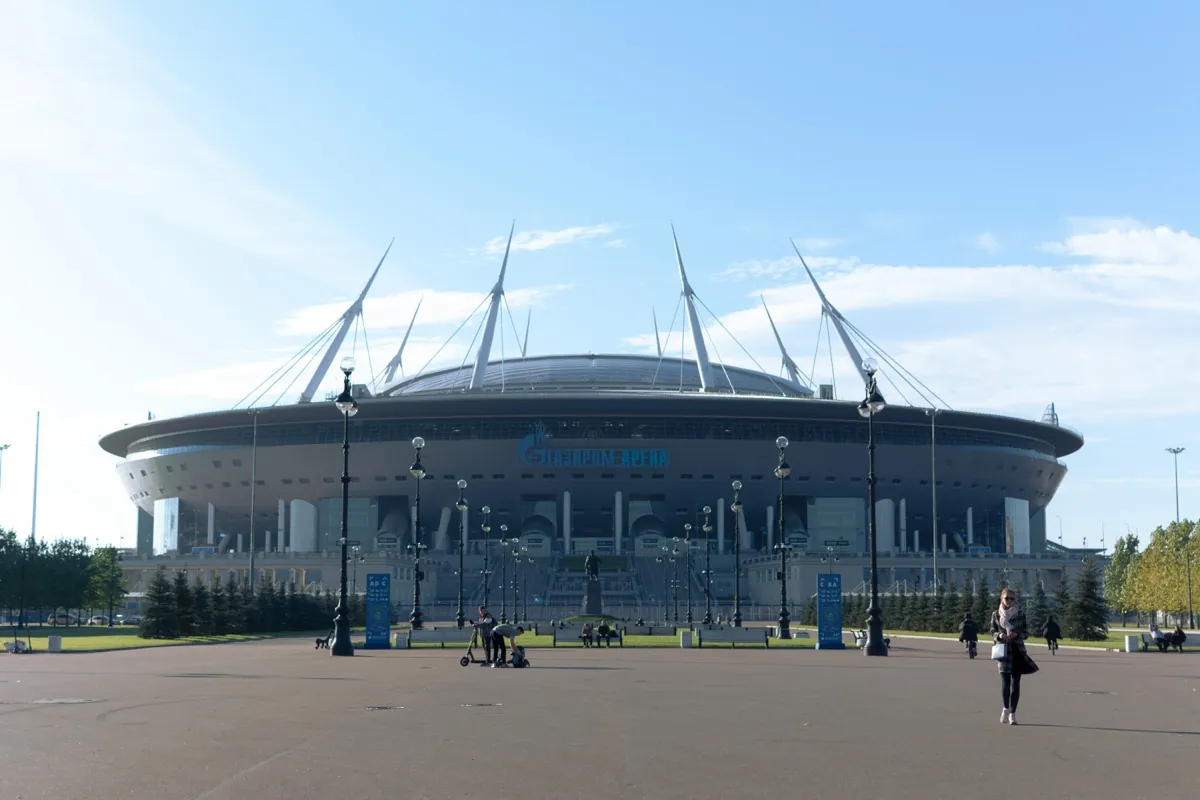
Systems over units.
Why smaller vehicles don't solve bigger crowd problems.
The micro-mobility revolution was supposed to change everything. Cities were drowning in cars. Traffic was getting worse. Parking was consuming real estate. And the solution, we were told, was to shrink the vehicle.
It didn't.
What happened instead, in city after city, was that the vehicle got smaller but the structural problem stayed the same. Instead of too many cars on the road, there were too many scooters on the sidewalk. Instead of car congestion, there was scooter clutter. Instead of parking lots overflowing, there were scooter graveyards and dockless bikes piled on street corners. The unit changed. The inefficiency didn't.
The micro-mobility industry did something important: it proved that people will choose alternatives to cars when those alternatives are available. That's a genuine contribution. But it also revealed a deeper truth that the industry hasn't fully reckoned with:
Shrinking the vehicle doesn't fix the system. It just miniaturizes the same problem.
The issue was never the size of the vehicle. The issue was whether you're deploying units or building a system. And the difference between the two depends entirely on one question: is the flow predictable, or isn't it?
The framework: predictable flow vs. unpredictable flow
This is the distinction that changes how you think about moving people.
Unpredictable flow is what happens in a city on a Tuesday afternoon. People are going from random origins to random destinations at random times. One person needs to get from a train station to an apartment 0.7 miles away at 11 PM. Another needs to cross a university campus between classes. A third is running an errand that involves three stops in three different neighborhoods.
These trips are dispersed, irregular, and individual. You can't design a fixed route to serve them because the demand pattern changes every hour. This is where units make sense — a scooter, a bike, an Uber, eventually an autonomous pod. The unit serves the individual because the individual's trip is unique.
Predictable flow is what happens at a live event, a cruise terminal, a factory shift change, or a stadium on game day. Ten thousand people need to move from the same parking lot to the same gate in the same two-hour window. Three thousand workers need to get from the same gravel lot to the same reporting area at the same time every morning. Five thousand passengers need to move from the same parking structure to the same gangway between 11 AM and 3 PM.
These trips aren't individual. They're mass movements along known corridors at known times with known volumes. The origin is known. The destination is known. The timing is known. The volume is known.
When the flow is predictable, the solution is a system — fixed routes, posted schedules, high-capacity vehicles, consolidated movement. When the flow is unpredictable, the solution is a unit — individual vehicles, on-demand dispatch, flexible routing.
The mistake the venue and event industry has made for decades is deploying units to solve a systems-level problem.
And the consequences land publicly. Coachella, the Kentucky Derby, the Super Bowl, F1, and the Arlington pedicab ban are five different events that hit the same wall — units pretending to be a system, until the system failed in a way that made the news.
Golf carts are units pretending to be a system
Here's the uncomfortable truth about golf cart fleets at large venues: they're the scooter-share of the event world.
A venue deploys 50 golf carts and calls it a "shuttle operation." But look at how it actually functions. Each cart carries 4–6 passengers. Each cart is dispatched individually — someone radios, a cart is sent, maybe. There's no fixed route. No posted schedule. No way for a fan in a remote lot to know when the next ride is coming or where to board. Each cart makes its own trip, on its own path, at its own discretion.
That's not a system. That's 50 individual vehicles making 50 individual decisions. It's the exact same structural problem as a city full of cars — just smaller, slower, and running on a golf course instead of a highway. It's also a labor problem the same shape as the vehicle problem: 50 untrained drivers staffed from whoever is left in a tight event-labor market, supervised by nobody, accountable through nobody.
The math is the same on every property where this pattern shows up — including the four major golf tournaments, which draw 200,000+ spectators each with zero on-site parking and need real systems, not the same carts that gave the tournaments their name.
The utilization numbers confirm it. Golf cart utilization at most large events hovers around 30% — which means you're paying for four seats of capacity and filling one. That's the efficiency profile of single-occupancy vehicle traffic, not transit.
Now consider what happens if you replace those 50 carts with a system: 4–6 trams running fixed loops on posted schedules, each carrying 27 passengers. The total passenger capacity per hour goes up. The total vehicle count goes down. The driver count drops from 50 to 6. The routes are predictable, so riders know where to find them. The schedule is posted, so riders know when the next one arrives.
One approach is 50 units. The other is a system. The flow is predictable — thousands of people, same origin, same destination, same time window — so the system wins. Every time. By the math.
Why shrinking the unit further doesn't help
If golf carts are units pretending to be a system, e-scooters and e-bikes at venues would be even smaller units making the same mistake at an even less efficient scale.
Imagine deploying 500 rental e-scooters at a 100,000-person festival. What happens?
You've added 500 individual vehicles to pathways designed for pedestrians. You've created new conflict points between scooter riders and walkers — the same pedestrian-vehicle safety problem that golf carts create, except now the vehicles are being operated by untrained riders instead of staff. You've introduced liability exposure for every rider who falls, collides, or injures a pedestrian. And you've solved nothing about throughput — because 500 scooters carrying one person each move fewer people per hour through a corridor than a single tram carrying 27.
The unit got smaller. The problem got worse.
This isn't theoretical. The few events that experimented with scooter rentals in fan zones discovered exactly this — the scooters created more problems than they solved and were quietly pulled from subsequent editions.
Micro-mobility works in cities because urban flow is unpredictable. It fails at venues because venue flow is predictable — and predictable flows need consolidation, not more fragmentation.
Even autonomous cars need a system on the other side
Here's the question venue operators will face sooner than they think: what happens when autonomous vehicles handle the drive to the venue — but still drop everyone off at the edge of the property?
Right now, fans drive themselves and park in distributed lots across the campus. They're spread out. Their arrivals are staggered by which lot they find and how long it takes to park. The walk is long, but the crowd is dispersed.
In an autonomous future, that dynamic inverts. The car doesn't park — it drops you off and leaves, either to park itself remotely or to pick up its next passenger. Which means every arriving fan converges on the same drop-off zone. Instead of distributed parking arrivals spread across dozens of lots, you get concentrated drop-off arrivals funneled to a handful of curb points at the property perimeter.
The volume at the drop-off zone explodes. And the walk from that zone to the gate, the grandstand, the terminal? It's still there. It might actually be longer — because autonomous drop-off areas will likely be pushed to the perimeter for safety, traffic flow, and vehicle staging reasons, just like rideshare zones are today. Anyone who's used a rideshare at a major event has already experienced the prototype: dropped off a quarter mile from the entrance, then left to walk.
The return trip creates an even sharper problem. After the event, 70,000 fans summon their autonomous cars simultaneously. Those vehicles need to reach the pick-up zone, load passengers, and exit — all through the same corridors. The pick-up zone becomes the new bottleneck. And fans still need to get from the venue to the pick-up zone. That mass movement — predictable origin, predictable destination, predictable timing, massive volume — is a transit problem. A systems problem.
Autonomous cars will transform the drive to the venue. They won't eliminate the need for onsite transit. They'll create a more concentrated, more defined version of it. The drop-off zone becomes the new remote parking lot. And the gap between that zone and the destination is exactly the corridor that needs a system.
Building a system, not buying more units?
We work with venues, events, and campuses to replace fragmented unit-based fleets with fixed-route, posted-schedule transit systems — designed around predictable demand corridors, not individual trips.
Autonomous pods inside the venue don't fix it either
Some will argue that the answer is autonomous vehicles within the venue — small self-driving pods dispatched on demand to carry fans from the drop-off zone to their seats.
Picture 50 autonomous pods deployed at a stadium on game day. Each one carries 4–6 passengers. They're self-driving, so you save on drivers. They're electric, so you save on fuel. They route themselves using AI, so they're optimized. Sounds great.
But look at what's actually happening in the corridor. You still have 50 individual vehicles competing for the same narrow path between the drop-off zone and the gate. You still have 50 separate pick-up events and 50 separate drop-off events. You still have congestion at the bottleneck — the gate entrance — because the vehicles are arriving individually rather than delivering passengers in consolidated batches.
You've automated the unit. You haven't built a system.
A single 27-passenger tram on a 10-minute fixed loop through the same corridor moves more people per hour with less congestion, fewer conflict points, and more operational predictability than a fleet of autonomous pods. Not because the tram is more technologically advanced — it isn't — but because the flow is predictable, and a system designed around predictable flow is structurally more efficient than any collection of units, no matter how smart the units are.
The autonomous vehicle future will be transformative for unpredictable urban flow — the random Tuesday afternoon trip across a city. But for predictable mass movement along a known corridor — from a drop-off zone to a gate, from a parking lot to an entrance, from a campground to a stage? The answer is the same one transit planners arrived at a century ago: high-capacity shared vehicles on fixed routes.
The decision framework
This gives venue operators, event producers, and facility managers a simple test for any transportation challenge:
Ask: is the flow predictable or unpredictable?
If people are going from random places to random destinations at random times — that's unpredictable flow. Deploy units. Scooters, bikes, rideshare, on-demand carts. Let the individual solve their own trip.
If people are going from a known origin to a known destination in a known time window at a known volume — that's predictable flow. Build a system. Fixed routes, posted schedules, high-capacity vehicles, consolidated boarding points.
Most of the environments FlexTram serves are overwhelmingly predictable:
- Festivals: 100,000 fans, same parking fields, same entrance, same 4-hour arrival window
- Stadiums: 70,000 fans, same satellite lots, same gates, same 2-hour ingress and simultaneous egress
- Cruise terminals: 5,000 passengers, same parking structure, same gangway, same 4-hour embarkation window
- Data centers: 3,000 workers, same gravel lot, same reporting area, same shift change twice daily
- Golf tournaments: 200,000 weekly spectators, same remote lots, same shuttle terminals, same zero on-site parking
- Warehouses: 1,000 workers per shift, same lots, same building entrance, same 15-minute walk three times daily
In every case: known origin, known destination, known timing, known volume. The textbook definition of a system-level problem.
And in every case, the current solution is a collection of units — golf carts, ad hoc shuttles, truck-towed trailers, or nothing at all — deployed against a problem that units can't solve efficiently.
Units are easy to buy. Systems are hard to build.
There's a reason the venue industry defaulted to units: they're simpler. You call a rental company, they deliver 50 golf carts, you scatter them across your property, and you've "solved" transportation. The purchase order is straightforward. The deployment is fast. The illusion of coverage is immediate.
Building a system requires more. You need to study the flow — where people are coming from, where they need to go, when the volume peaks, where the bottlenecks form. You need to design routes. You need to set schedules. You need to right-size the fleet to the demand. You need to train drivers on fixed-route operation rather than ad hoc dispatch. You need to post boarding points and communicate the schedule to riders.
That's more work than renting golf carts. But it's the same work that every transit agency in the world does — and the reason they do it is because the math is irrefutable. Systems move more people, more efficiently, with fewer resources, than any collection of units.
The venue industry is one of the last sectors to learn what cities learned a century ago: when the flow is predictable and the volume is high, you don't need more vehicles. You need fewer vehicles, running smarter, on a system designed for the demand. Or, framed from the visitor's side: you don't need more visitors — you need less friction between the visitors you already have and the experience they came for.
50 golf carts is not a transportation system. It's 50 golf carts.
Frequently asked questions
What is the difference between a unit and a system in venue transportation?
A unit is an individual vehicle — a golf cart, a scooter, a rideshare car, an autonomous pod — dispatched on demand for one trip at a time. A system is a coordinated network of high-capacity vehicles running fixed routes on posted schedules. Units make sense when the flow is unpredictable (individual trips from random origins to random destinations). Systems make sense when the flow is predictable (mass movement from known origins to known destinations at known times). At venues, the flow is overwhelmingly predictable — making it a system-level problem solved inefficiently by most current operators with unit-level deployments.
Why doesn't micro-mobility work at venues the way it works in cities?
Micro-mobility (scooters, e-bikes, shared dockless vehicles) succeeds in cities because urban flow is unpredictable — dispersed origins, dispersed destinations, irregular timing. A unit-based approach serves individual trips well. At venues the flow is the opposite: 70,000 fans going from the same satellite lots to the same gates in the same 2-hour window. That's predictable mass movement along known corridors, and the efficient answer is a system — high-capacity vehicles on fixed routes — not hundreds of small individual units adding fragmentation to the problem.
Will autonomous vehicles eliminate the need for onsite transit at venues?
No — they'll sharpen the need for it. Autonomous vehicles will transform the drive TO the venue, but they still have to drop fans at the property perimeter. Drop-off zones will concentrate arrivals at a handful of curb points, and pick-up zones after the event will become the new bottleneck as 70,000 fans summon their cars simultaneously. The gap between the drop-off zone and the gate — a predictable-flow, high-volume, known-corridor transit problem — still needs a system. Self-driving pods inside the venue repeat the same mistake as golf carts: 50 automated units still compete for the same narrow corridor and still congest at the bottleneck.
What is the decision framework for choosing units vs. a system?
Ask one question: is the flow predictable or unpredictable? Unpredictable flow (random origins, random destinations, random timing) calls for units — scooters, bikes, rideshare, on-demand carts. Predictable flow (known origins, known destinations, known timing, known volume) calls for a system — fixed routes, posted schedules, high-capacity vehicles, consolidated boarding points. Festivals, stadiums, cruise terminals, data centers, golf tournaments, and warehouses are all overwhelmingly predictable, which makes them system-level problems.
Why do most venues default to golf carts instead of a system?
Because units are easier to buy than systems are to build. Renting 50 golf carts is a simple purchase order and a fast deployment — it creates the illusion of coverage immediately. Building a system requires studying the flow, designing routes, setting schedules, right-sizing the fleet, training drivers on fixed-route operation, and posting boarding points. That's more work, but it's the same work every transit agency in the world does — and the reason they do it is because the math is irrefutable. Systems move more people, more efficiently, with fewer resources, than any collection of units.
Related reading
Stop buying units. Build a system.
FlexTram offers rentals, long-term leases, and turnkey transportation plans for venues, events, campuses, and operations of any size. Tell us about your footprint and we'll design the system around your demand.